Job completed for Jerry B
Completion date: July 2, 2008
Location: Indianapolis, IN
Solutions provided:
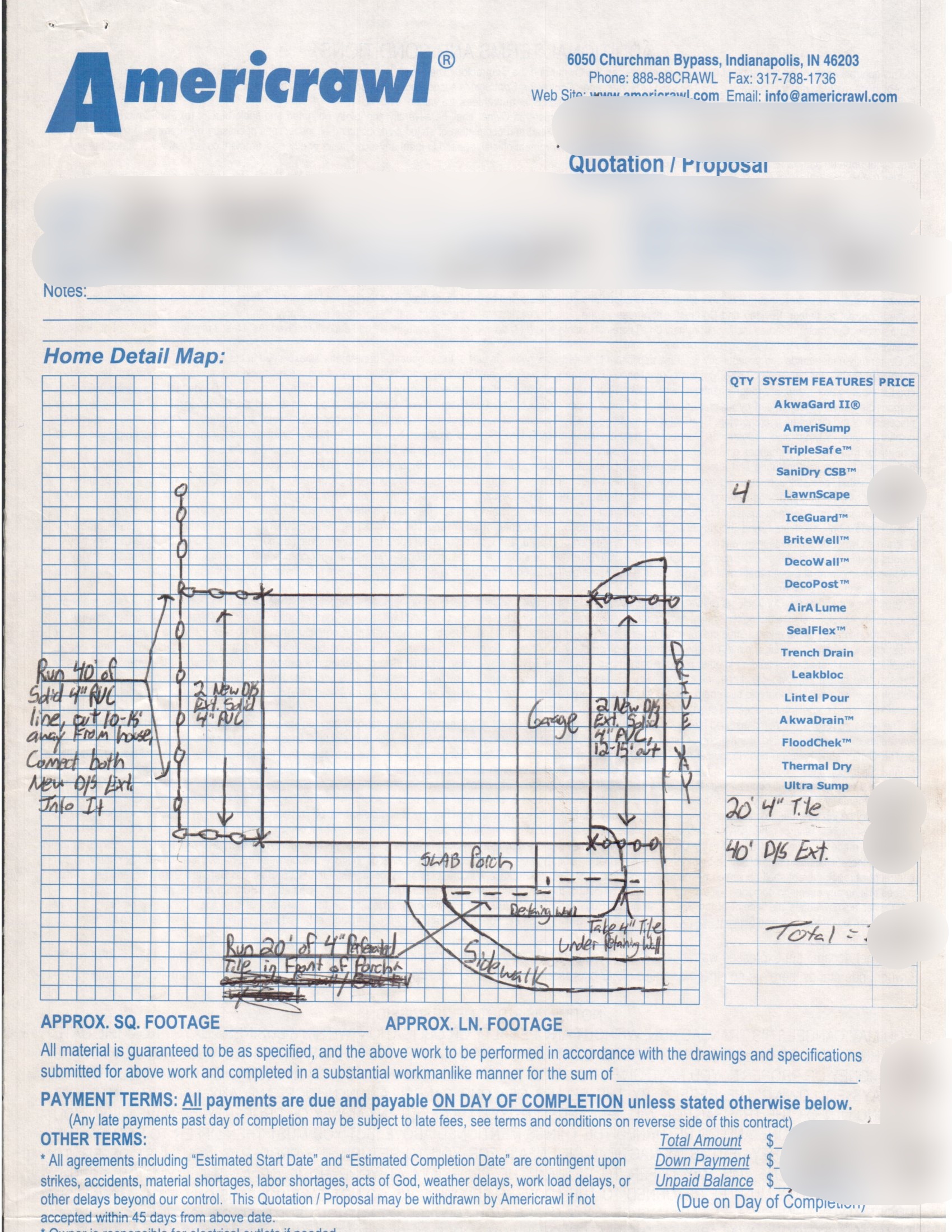
A complete setup for four downspout extensions using PVC requires planning the layout, gathering the right materials, and ensuring proper water flow away from the home’s foundation. For each extension, you would run approximately sixty feet of PVC pipe from the base of the downspout to the discharge point, which helps move roof runoff far enough away to prevent erosion, flooding, or basement moisture. Most installations use 4-inch PVC (either Schedule 40 or SDR-35) because it provides excellent flow capacity and resists clogging, especially during heavy rain. Each 60-foot run typically uses six 10-foot sections of PVC, connected with couplings and sealed using primer and cement, meaning all four extensions generally require about 24 PVC pipes plus 20–24 couplings. At the downspout connection, an aluminum or plastic downspout-to-PVC adapter is attached, often followed by a short vertical piece of PVC and an elbow to direct the pipe toward the ground. The full line should be installed with a gradual slope—ideally about 1/8 inch per foot, so roughly 7–8 inches of total drop across the 60-foot length—to ensure smooth drainage without standing water. These PVC lines can be buried in shallow trenches or run along the surface, but burying them helps protect the pipe and creates a cleaner appearance. At the discharge end, you can attach a pop-up emitter, a daylight opening, a gravel-filled dry well, or even a simple splash block depending on your property’s layout and how you want the water dispersed. Once everything is connected, it’s important to test the system by running water through the downspouts to confirm that the slope is consistent and no joints leak. With all four extensions installed properly, you’ll have a durable, long-lasting drainage system that moves roof water safely and efficiently away from your home.
Team members on this project:
Daniel
Photos & Videos: